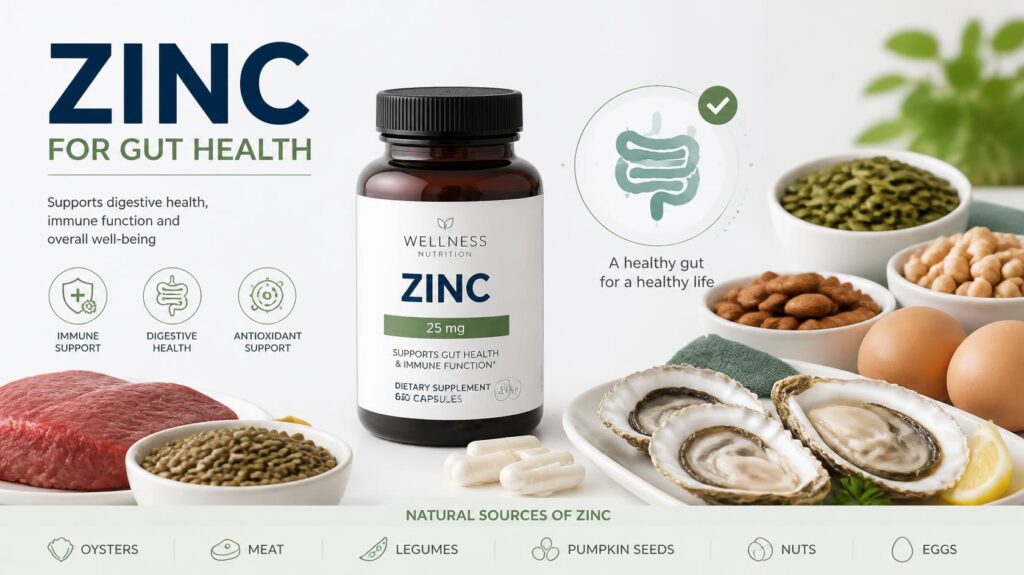
Zinc rarely gets the spotlight that gut bacteria, fiber, or fermented foods get in gut health conversations. Yet this trace mineral plays a foundational role in maintaining the intestinal barrier, regulating the gut microbiome, and supporting the immune tissue that lines the digestive tract. For patients dealing with IBS, IBD, or general digestive complaints, zinc status is often an overlooked piece of the puzzle.
Why Zinc Matters for the Gut Barrier
The intestinal lining is held together by structures called tight junctions — protein complexes between epithelial cells that control what passes from the gut into the bloodstream. When tight junctions become loose or dysfunctional, the result is increased intestinal permeability, often referred to informally as “leaky gut.”
Zinc appears to play a direct structural role here. A patient-based study using oral zinc gluconate found that supplementation induced remodeling of intestinal tight junction proteins — notably claudin-2 and tricellulin — and reduced a blood marker of intestinal permeability after treatment in otherwise healthy subjects. The same research noted that increased gut permeability has been implicated in a range of conditions, from inflammatory bowel disease to celiac disease, which is part of why this mechanism draws clinical interest.
This isn’t a new observation. In patients with Crohn’s disease in remission but with documented increased intestinal permeability, eight weeks of oral zinc sulfate supplementation was studied specifically to determine whether it could help tighten the gut barrier and reduce relapse risk. Around the same period, research on zinc carnosine — a chelated compound combining zinc with the amino acid carnosine — showed it could stimulate intestinal cell migration and proliferation, reduce indomethacin-induced gut permeability in healthy volunteers, and support mucosal repair.
Zinc Deficiency and IBS
The connection between zinc and digestive symptoms isn’t limited to inflammatory conditions. A case-control study using Rome IV diagnostic criteria found that patients with diarrhea-predominant IBS had lower serum zinc levels than matched healthy controls, adding to a broader body of literature examining intestinal permeability as a mechanism worth targeting diagnostically and therapeutically in IBS.
This raises a practical question for clinicians: should zinc status be checked routinely in patients presenting with chronic bowel symptoms? The existing evidence doesn’t yet support zinc testing as a standard of care, but it does suggest zinc deficiency is worth considering as a contributing factor, particularly in patients with additional risk factors for poor mineral status.
Zinc and the Gut Microbiome
Beyond the physical gut barrier, zinc shapes the composition of the gut microbiome itself. Reviews on this relationship describe it as bidirectional: zinc status influences microbial diversity, and the microbiome in turn affects zinc absorption and metabolism. Physiological, food-based doses of zinc have been associated with improved gut wall integrity and reduced translocation of bacteria and microbial metabolites into systemic circulation — while zinc overexposure has the opposite effect, disrupting microbial balance. This dose-dependency is an important clinical nuance: more zinc is not automatically better for gut health.
Zinc deficiency, meanwhile, has been correlated with several gastrointestinal conditions, including Crohn’s disease, impaired intestinal permeability, and irritable bowel syndrome, alongside its established role in immune modulation — since roughly 70–80% of the body’s immune cells reside in gut-associated tissue.
Practical Takeaways
- Food sources first. Oysters, red meat, poultry, beans, nuts, and fortified cereals are well-established dietary sources of zinc, and covering requirements through food is generally the safest approach for most patients.
- Deficiency risk groups. Vegetarians and vegans, older adults, people with malabsorptive conditions (including IBD and celiac disease), and those on long-term proton pump inhibitors or thiazide diuretics are at higher risk of suboptimal zinc status.
- Supplementation is not one-size-fits-all. Therapeutic doses used in research (such as zinc carnosine protocols or higher-dose zinc sulfate in IBD studies) are considerably higher than standard dietary recommendations and were used under clinical supervision. Excess zinc can itself disrupt gut microbial balance and interferes with copper absorption.
- Zinc is a piece of the picture, not a stand-alone fix. In every study reviewed here, zinc was investigated as an adjunct within a broader clinical strategy — not a replacement for proper diagnosis and treatment of the underlying digestive condition.
The Bottom Line
The research on zinc and gut health is still evolving, but the mechanistic case is solid: zinc supports tight junction integrity, contributes to a balanced gut microbiome, and deficiency has been repeatedly linked to increased intestinal permeability and digestive symptom severity. For patients with persistent gut issues, an evaluation of zinc status — alongside overall dietary pattern and other micronutrients — can be a reasonable part of a broader clinical work-up, ideally guided by a qualified nutrition professional rather than self-directed high-dose supplementation.
If you’re dealing with persistent digestive symptoms and want a personalized evaluation, Book a consultation with Dr. Schirippa.
References
- Sturniolo GC, Di Leo V, Ferronato A, D’Odorico A, D’Incà R. Zinc supplementation tightens “leaky gut” in Crohn’s disease. Inflamm Bowel Dis. 2001;7(2):94–98.
- Rezazadegan M, et al. Zinc deficiency and intestinal permeability in the context of rational diagnostic and drug development for diarrhea-predominant irritable bowel syndrome. Dig Dis Sci. 2022.
- [Study on orally administered zinc gluconate and intestinal tight junction remodeling]. PMC12429388.
- Odenwald MA, et al. Intestinal barrier impairment, preservation, and repair: an update. Nutrients. 2024;16(20):3494.
- Mahmood A, et al. Zinc carnosine, a health food supplement that stabilises small bowel integrity and stimulates gut repair processes. Gut (via PubMed abstract). PMID: 16777920.
- Zinc-fortified oral rehydration solution improved intestinal permeability and small intestinal mucosal recovery in children with acute gastroenteritis. PubMed. PMID: 25520366.
- Scarpellini E, et al. Zinc and gut microbiota in health and gastrointestinal disease under the COVID-19 suggestion. PubMed. PMID: 35218585.
- Skrypnik K, Suliburska J. Gut microbiota as a mediator of essential and toxic effects of zinc in the intestines and other tissues. Int J Mol Sci. 2021;22(23):13074.
- Multifunctional role of zinc in human health: an update. PMC10539547.
- National Institutes of Health, Office of Dietary Supplements. Zinc: Fact Sheet for Health Professionals. ods.od.nih.gov.
This article is for informational purposes only and does not constitute medical advice. Patients considering zinc supplementation, particularly at doses above the standard RDA, should consult a licensed healthcare provider or registered nutrition professional.