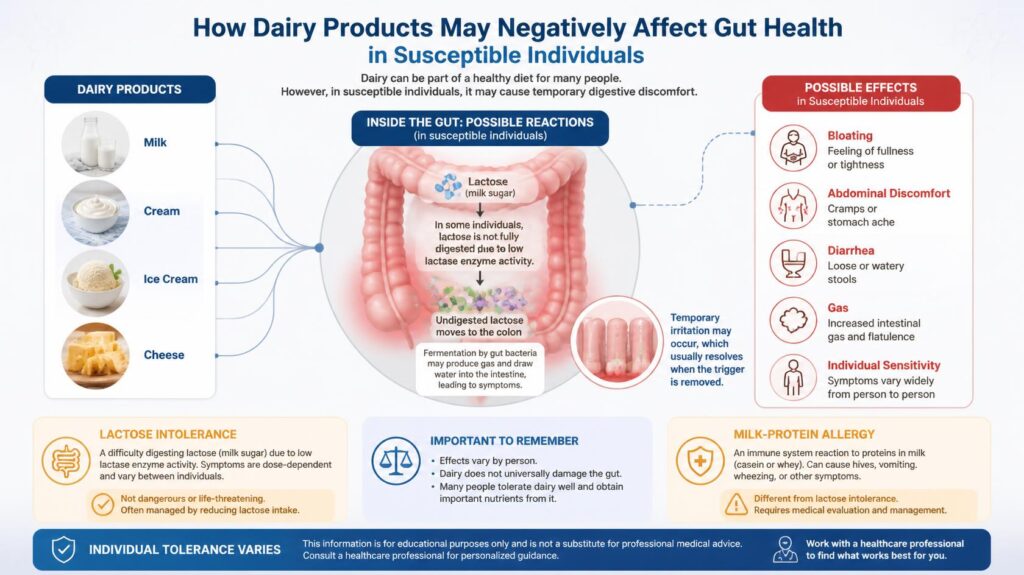
Few foods divide nutrition science quite like dairy. Depending on which study you read, milk protein is either a metabolic ally — improving satiety, blood sugar control, and body composition — or a source of bioactive peptides capable of provoking gut inflammation and disrupting insulin signaling. Both pictures are supported by real research. The difference usually comes down to one detail most people have never heard of: which type of casein is actually in the glass.
Casein Is Not One Thing
Cow’s milk protein is roughly 80% casein and 20% whey. Casein itself is not a single molecule — it’s a family of proteins, and the most researched variant in recent years is beta-casein, which comes in two common genetic forms: A1 and A2. Older cattle breeds and most non-Western dairy herds (including goat, sheep, and buffalo milk) produce almost exclusively A2 beta-casein. Many modern Western dairy breeds produce a mix of A1 and A2, and it’s the A1 form that has become the focus of a growing body of gut-health research.
The distinction matters because of a single amino acid. During digestion, A1 beta-casein — but not A2 — releases a peptide fragment called beta-casomorphin-7 (BCM-7), an opioid-like compound that behaves very differently in the gut than the fully digested protein itself.
How BCM-7 Interacts With the Gut
BCM-7 binds to mu-opioid receptors found throughout the gastrointestinal tract. In animal studies, this interaction has been linked to several downstream effects: slowed gut transit, increased mucin production in the intestinal lining, and — most relevant here — a measurable inflammatory response. One frequently cited mouse study found that BCM-7 exposure increased inflammatory markers (including IL-4, histamine, and toll-like receptor expression) through a Th2-mediated immune pathway, with the inflammation localized specifically to the colon rather than the small intestine or systemic circulation.
A more recent 2026 narrative review examined eight studies comparing A1 and A2 beta-casein’s effects on the gut microbiota directly. The pattern that emerged was consistent, if not yet definitive: A1 beta-casein was more frequently associated with dysbiosis and a higher abundance of potentially pathogenic bacterial species, while A2 beta-casein was more consistently linked to greater microbial diversity — a marker generally associated with a healthier, more resilient gut environment.
It’s worth being transparent about the limits of this evidence, though. Not every study agrees. One 2024 investigation using human immune cells found that digested milk — regardless of A1 or A2 status — actually had an anti-inflammatory effect in vitro, and concluded that BCM-7 alone may not be a reliable biomarker for food-induced inflammation. Where BCM-7’s effects appear most consistent and best-documented is in a different tissue type entirely: a 2026 cell-culture study found that BCM-7 measurably increased inflammatory cytokines (IL-6, IL-8) and oxidative stress in vascular endothelial cells, particularly when combined with existing inflammatory triggers. This is a genuinely active and evolving research area — the honest summary is “biologically plausible and mechanistically supported, but not yet fully settled,” not “proven.”
The Gut-Barrier and Permeability Question
The mucin-production effect deserves a closer look, because it cuts both ways. A healthy mucus layer is protective — it’s the physical barrier between gut bacteria and the intestinal wall. But in someone who already has a compromised or overly permeable gut lining, an increase in mucin production driven by opioid-receptor activation may not be a straightforwardly good thing; some researchers have flagged this as a possible reason why A1 casein consumption is more frequently reported to worsen symptoms specifically in people who already have digestive sensitivities, rather than in the general population. This fits a broader pattern seen across dairy research: individual gut baseline — not the food itself in isolation — often determines whether a given protein is well tolerated.
Where Casein Interacts With Blood Sugar and Insulin
Separately from the A1/A2 story, casein has a well-established and largely beneficial role in glucose metabolism — this is not in dispute the way the inflammation question is. Because casein digests slowly relative to whey, it produces a gradual, sustained release of amino acids into the bloodstream, which helps delay intestinal glucose absorption and stabilize post-meal blood sugar swings. This slow-digesting property is one reason dairy protein, as a category, has been associated in multiple reviews with improved insulin sensitivity, reduced dyslipidemia, and modest benefits for blood pressure — effects thought to be driven partly by casein and partly by dairy’s calcium, vitamin D, and short-chain fatty acid content acting on the gut-microbiome axis.
There is a more specific and more debated mechanism worth mentioning here too: some research has proposed that BCM-7 can interfere with insulin signaling directly, by binding opioid receptors on insulin-target cells and disrupting the GLUT-4 transport pathway needed to move glucose into cells, with a parallel proposed effect on pancreatic beta-cell GLUT-2 receptors. This remains one of the more mechanistically detailed but least clinically confirmed pieces of the casein research — worth knowing about, not yet something to build dietary decisions around.
Whey, Casein, and Weight Management
When it comes to sustainable, physiology-based weight management, the two major milk proteins don’t behave identically. Whey protein has more consistently demonstrated benefits for satiety, lean mass preservation, and modest reductions in lipogenic enzyme activity in adipose tissue — animal studies have shown whey specifically reduces early-life weight gain on a high-fat diet more effectively than casein does. Casein’s contribution to weight management appears to work through a different, slower mechanism: sustained amino acid release supporting satiety over a longer window, rather than whey’s faster metabolic signaling. Neither protein is inherently “better” — they appear to support different parts of the same goal.
Why the Gut Microbiome Ties It All Together
The reason casein research increasingly intersects with obesity and diabetes research is the same reason it belongs in a broader conversation about gut health: dysbiosis — an imbalance in gut bacterial composition — is now understood as a common thread linking obesity, insulin resistance, and type 2 diabetes. Diet is one of the primary levers that shapes microbiome composition, and milk protein, consumed daily by a large share of the population, is exactly the kind of dietary variable capable of nudging that balance in either direction depending on which casein variant, and how much of it, someone is regularly consuming.
The Practical Takeaway
None of this amounts to “dairy is bad” or “dairy is good” — the more accurate, if less satisfying, conclusion is that dairy’s effects depend heavily on which proteins are present and on the individual gut environment they’re entering. For most people without digestive sensitivities, casein’s slow-digesting, blood-sugar-stabilizing properties are a genuine metabolic asset. For people with IBS-like symptoms, unexplained gut inflammation, or a personal history of poor dairy tolerance, the A1/A2 distinction is a reasonable, evidence-informed variable to discuss with a clinician — not a reason to eliminate dairy outright without first understanding why it’s causing problems.
References
- A Narrative Review: A1 and A2 Milk Beta Caseins Effect on Gut Microbiota. Nutrients. 2026;18(1):138. doi:10.3390/nu18010138
- Nutritional components, health effects, and disease prevention mechanisms of dairy products: a narrative review. Frontiers in Public Health. 2026;14:1799734. doi:10.3389/fpubh.2026.1799734
- Dairy intake and risk of type 2 diabetes and metabolic syndrome: a narrative review. Results in Surfaces and Interfaces. 2026;23:100769.
- Torres-Castillo N, et al. Effects of Dairy Protein and Fat on the Metabolic Syndrome and Type 2 Diabetes. PMC. Available at: pmc.ncbi.nlm.nih.gov/articles/PMC4310065
- Metabolic Syndrome and Biotherapeutic Activity of Dairy (Cow and Buffalo) Milk Proteins and Peptides: Fast Food-Induced Obesity Perspective — A Narrative Review. PMC. Available at: ncbi.nlm.nih.gov/pmc/articles/PMC11048494
- Whey Protein Reduces Early Life Weight Gain in Mice Fed a High-Fat Diet. PMC. Available at: ncbi.nlm.nih.gov/pmc/articles/PMC3735523
- Beneficial Effects of Milk Having A2 β-Casein Protein: Myth or Reality? The Journal of Nutrition. 2022. Available at: jn.nutrition.org/article/S0022-3166(22)00140-7
- β-Casomorphin-7 as a Potential Inflammatory Marker: How β-Casomorphin-7 Induces Endothelial Dysfunction in HUVEC/TERT2 Cell Lines. PMC. 2026. Available at: ncbi.nlm.nih.gov/pmc/articles/PMC12650039
- Effects of A1 Milk, A2 Milk and the Opioid-like Peptide β-Casomorphin-7 on the Proliferation of Human Peripheral Blood Mononuclear Cells. PMC. 2024. Available at: ncbi.nlm.nih.gov/pmc/articles/PMC11201611