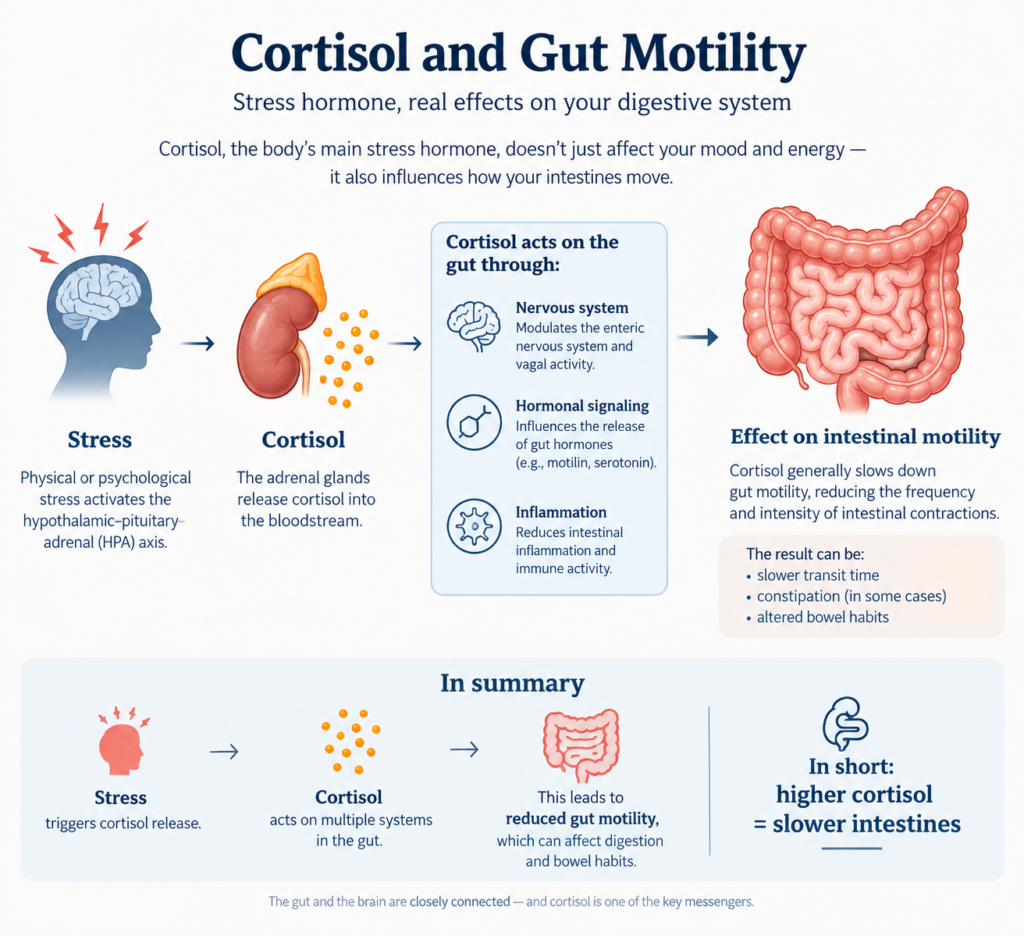
If you’ve ever felt your stomach twist before a big presentation, or noticed your digestion slow to a crawl during a stressful week, you’ve experienced firsthand what researchers call the gut-brain axis in action. At the center of that connection sits cortisol — the body’s primary stress hormone — and its influence on gut motility is far more significant than most people realize.
What Is Cortisol, and Why Does It Matter for Digestion?
Cortisol is produced by the adrenal glands under instructions from the brain’s hypothalamic-pituitary-adrenal (HPA) axis. In short bursts, it’s protective: it mobilizes energy, sharpens focus, and helps the body respond to acute threats. The problem arises when cortisol stays elevated for weeks or months at a time, which is increasingly common given modern work schedules, poor sleep, and constant low-grade stress.
Chronically high cortisol doesn’t stay confined to the bloodstream — it reshapes gut function at multiple levels: motility, permeability, immune activity, and the composition of the microbiome itself.
How Cortisol Affects Gut Motility
Gut motility — the coordinated muscle contractions that move food through the digestive tract — is tightly regulated by the enteric nervous system, sometimes called the “second brain.” Cortisol and the broader stress response interact with this system in a few key ways:
- Slowed gastric emptying. Persistent stress can delay how quickly the stomach empties into the small intestine, contributing to bloating, early fullness, and discomfort after meals.
- Altered colonic transit. Some people experience faster transit (linked to urgency and loose stools), while others experience slower transit and constipation — the direction often depends on individual HPA axis reactivity.
- Vagal nerve suppression. The vagus nerve, a key communication line between gut and brain, tends to be less active under chronic stress, which reduces the “rest and digest” signaling that supports healthy peristalsis.
- Disruption of the migrating motor complex (MMC). This is the housekeeping wave that clears residual food and bacteria between meals. Chronic stress can interfere with it, which has been linked to conditions like SIBO — we cover this connection in more depth in our piece on SIBO and heart palpitations.
The Gut-Brain Axis: A Two-Way Street
It’s tempting to think of this as a one-directional problem — stress harms the gut — but the relationship runs both ways. A compromised gut lining or an imbalanced microbiome can itself become a source of physiological stress, keeping cortisol output elevated even when external stressors have passed. This creates a self-reinforcing loop: stress disrupts the gut, and gut dysfunction sustains the stress response.
Research on the gut microbiome’s role in regulating the HPA axis continues to expand, and animal studies published on PubMed Central have shown that introducing certain beneficial bacteria can help normalize an exaggerated stress response, underscoring just how intertwined these systems are.
Signs Your Gut May Be Affected by Elevated Cortisol
- Bloating or discomfort that worsens during stressful periods
- Irregular bowel habits — alternating constipation and urgency
- Increased sensitivity to certain foods that weren’t previously a problem
- Fatigue that doesn’t improve with sleep, paired with digestive symptoms
- Difficulty losing abdominal weight despite consistent diet and exercise
Practical Strategies to Support Cortisol and Gut Health Together
- Anchor your circadian rhythm. Cortisol naturally peaks in the morning and tapers through the day. Consistent wake times, morning light exposure, and a wind-down routine at night help keep this rhythm — and gut motility — on track.
- Prioritize vagal tone. Slow, diaphragmatic breathing before meals activates the parasympathetic nervous system and supports healthy digestion.
- Support key nutrient status. Certain minerals play a direct role in muscular and nervous system function that underlies healthy motility — magnesium in particular is worth understanding in the context of gut health.
- Don’t skip meals under stress. Irregular eating patterns during high-cortisol periods can further disrupt the migrating motor complex.
- Address stress directly. Movement, mindfulness practice, and adequate sleep aren’t just “nice to have” — they’re functional interventions for gut motility.
When to Seek Professional Support
Persistent digestive symptoms shouldn’t be dismissed as “just stress.” If bloating, irregular bowel movements, or abdominal discomfort continue despite lifestyle changes, it’s worth working with a practitioner who can evaluate both your HPA axis function and your gut health together, rather than treating them in isolation.
The Bottom Line
Cortisol isn’t the enemy — it’s a hormone your body needs. But when it stays chronically elevated, it can measurably slow or destabilize gut motility, disrupt the microbiome, and keep you stuck in a stress-gut feedback loop. Addressing cortisol and gut health as one interconnected system, rather than two separate problems, is often the key to lasting relief.
External sources referenced:
- NIH / PubMed Central — gut-brain axis and cortisol research
- Harvard Health Publishing — puoi aggiungere un secondo link esterno di tua scelta (es. il loro articolo generale sul gut-brain connection), oppure dimmi se preferisci che ne cerchi uno specifico