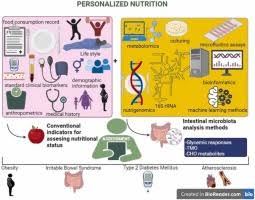
For decades, nutrition has been built around a relatively simple idea: if a food is healthy, it should be healthy for everyone.
The research of computational biologist Eran Segal, together with collaborators at the Weizmann Institute of Science, helped challenge this assumption. His work suggests that our response to food is not determined by the food alone. It is also shaped by the person eating it — including factors such as body composition, lifestyle, metabolic characteristics and the gut microbiome.
This idea has become one of the foundations of what is now known as personalized or precision nutrition.
The Same Food Does Not Affect Everyone in the Same Way
One of the most influential studies from Segal and his collaborators was published in Cell in 2015 under the title Personalized Nutrition by Prediction of Glycemic Responses.
The researchers followed 800 people and continuously monitored their blood glucose while collecting information about their dietary habits, physical activity, anthropometric characteristics, blood measurements and gut microbiome.
The striking observation was the degree of individual variation.
Two people could eat exactly the same food and experience substantially different post-meal glucose responses. A food that produced a relatively modest response in one person could produce a much larger response in another.
The original study is available here: Personalized Nutrition by Prediction of Glycemic Responses.
This matters because postprandial — or post-meal — glucose is not simply a reflection of how much sugar a food contains. The body’s response is influenced by a much more complex interaction between the food, the individual and their physiology.
The implication is important: a universal definition of the “best” food may be less useful than understanding how a particular person responds to that food.
Where Does the Microbiome Fit In?
The gut microbiome is the ecosystem of microorganisms living in the gastrointestinal tract. These microbes interact with the food we eat and produce metabolites that can influence human physiology.
Segal’s research incorporated microbiome information into models designed to predict individual responses to meals. The 2015 study showed that combining personal and microbiome features could predict post-meal glucose responses more accurately than approaches based simply on general nutritional assumptions.
This does not mean that the microbiome is a crystal ball capable of telling us exactly what every person should eat.
Rather, it suggests that the microbiome is one component of a much larger biological system.
That distinction is important. Personalized nutrition is not simply “microbiome nutrition.” It is an attempt to integrate multiple layers of information — from dietary habits and lifestyle to metabolic measurements and microbial characteristics — to understand why individuals respond differently to food.
From Calorie Counting to Biological Response
Traditional nutritional advice often focuses on calories, macronutrients and broad food categories.
Those measures remain useful. But personalized nutrition asks an additional question:
What happens after this particular person eats this particular food?
This shift from food composition to biological response is one of the most interesting aspects of Segal’s work.
A food does not exist in isolation. Its effect depends on the context in which it is consumed and on the characteristics of the person consuming it.
This helps explain why two people can follow ostensibly similar diets yet experience different changes in body weight, glucose regulation, satiety or other metabolic outcomes.
The Gut Microbiome and Dietary Fiber
The relationship between diet and the microbiome also helps explain why dietary fiber has become such an important area of research.
Certain fibers are fermented by gut microorganisms and can influence the production of short-chain fatty acids and other microbial metabolites.
For example, inulin is a prebiotic fiber found naturally in foods such as chicory, onions, garlic, leeks and asparagus. For a deeper look at this topic, see our article on inulin and gut health.
The broader lesson is more important than any individual ingredient: what we eat helps shape the ecosystem that lives inside us.
At the same time, the response to a particular fiber or food can differ between individuals. This is another reason why personalized nutrition is moving away from the idea that a single dietary intervention will produce identical results in everyone.
Personalized Nutrition Is Not a License to Ignore Basic Nutrition
There is a potential misunderstanding here.
If everyone responds differently to food, does that mean there are no healthy foods?
Not at all.
Personalized nutrition does not invalidate the importance of dietary fundamentals such as eating a varied diet, consuming adequate fiber, emphasizing minimally processed foods and maintaining an appropriate energy balance.
Instead, it adds another layer of information.
Think of general nutrition as the map and personalized nutrition as the GPS.
The map tells us which direction is generally healthier. Personal data may help us understand which route works best for a particular individual.
This principle also applies in clinical settings, where nutritional support may need to be adapted to a person’s health status, treatment and individual needs. Our personalized nutrition approach in oncology is one example of how nutrition can be tailored to a specific clinical context.
What Happened After the Original 2015 Study?
The work did not stop with the initial prediction model.
Segal and his collaborators continued to investigate personalized nutrition using machine learning, microbiome data and detailed clinical measurements. The field has increasingly moved beyond simply asking whether individual responses can be predicted and toward testing whether personalized dietary recommendations can actually improve health outcomes.
One important example is a randomized clinical trial published in Diabetes Care in 2021. The study compared a personalized postprandial glucose-targeting diet with a Mediterranean diet in 225 adults with prediabetes.
The personalized approach used a machine-learning algorithm incorporating clinical and microbiome features to predict individual post-meal glucose responses. The trial found greater improvements in several measures of glycemic control in the personalized-diet group compared with the Mediterranean-diet group.
You can read the full study here: Personalized Postprandial Glucose Response–Targeting Diet Versus Mediterranean Diet for Glycemic Control in Prediabetes.
This represents an important evolution in the field: moving from the question “Can we predict individual responses?” toward the harder question “Can using those predictions actually improve health outcomes?”
The Limits of Microbiome-Based Personalization
The science is promising, but it is still developing.
The gut microbiome is extraordinarily complex, and measuring it does not automatically tell us what intervention will work best. Microbial composition can change with diet, medication, lifestyle, age and other factors.
Moreover, association does not necessarily prove that a particular microorganism is causing a health outcome.
Researchers continue to investigate important questions regarding long-term effectiveness, mechanisms and the precise contribution of the microbiome to individual dietary responses.
That is why personalized nutrition should currently be viewed as an evolving scientific and clinical field rather than a magic formula.
What Can We Learn From Eran Segal’s Research?
Perhaps the most important lesson is surprisingly simple:
There may be no single optimal diet for everyone.
Instead, there are general nutritional principles that can be combined with increasingly detailed information about the individual.
The future of nutrition may therefore be less about finding one perfect diet and more about understanding the interaction between:
- the foods we eat,
- our metabolism,
- our lifestyle,
- our genetics,
- and the microbial ecosystem in our gut.
This perspective also changes the way we think about the microbiome. Rather than treating gut bacteria as a fashionable health accessory, personalized nutrition research places them within a much larger biological network.
The goal is not to eat according to a microbiome score.
The goal is to understand how our biology responds to food — and eventually use that knowledge to make dietary recommendations more precise, effective and sustainable.
A Final Perspective
Eran Segal’s research helped bring an important concept into mainstream scientific discussion: healthy eating may not be completely universal because biological responses are personal.
The next generation of nutrition research will likely combine continuous physiological monitoring, microbiome analysis, artificial intelligence and detailed lifestyle data to build increasingly individualized models of health.
But the most useful application of this science may ultimately be a simple one: helping people move from generic nutritional advice toward evidence-based choices that fit their own biology.
Personalized nutrition does not mean abandoning the fundamentals of healthy eating. It means recognizing that the same meal can create a different biological response in different people — and that understanding those differences may be one of the keys to the future of nutrition.
This article is for educational purposes only and does not constitute individualized medical or nutritional advice.