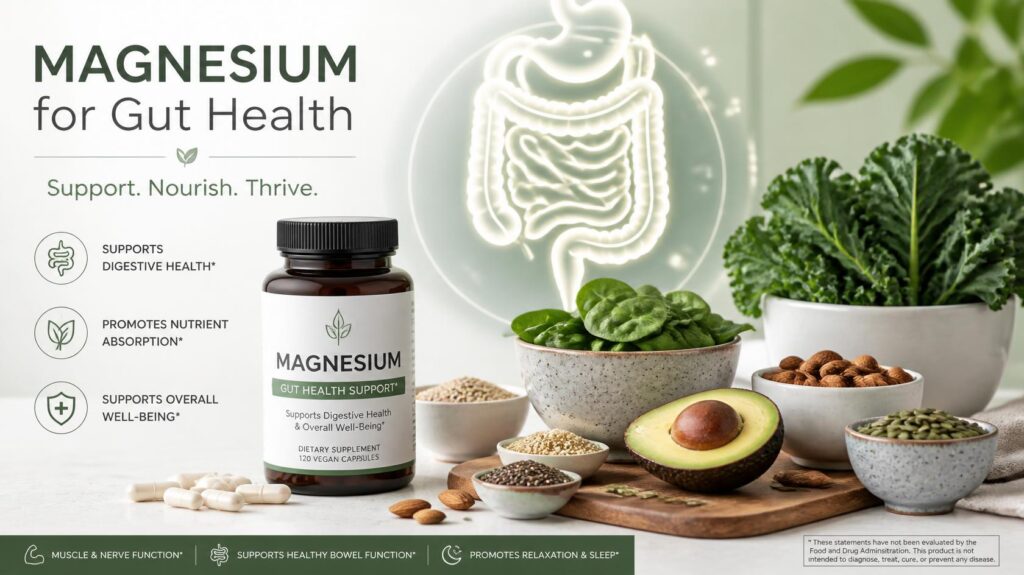
Your gut needs more than probiotics
When people think about improving gut health, they usually think of probiotics, yogurt, fermented foods, or fiber. Rarely does anyone mention magnesium.
Yet this humble mineral quietly supports hundreds of biological processes throughout the body, including many that take place inside your digestive system. Every heartbeat, every muscle contraction, every nerve impulse depends, in part, on magnesium.
Your intestines are no exception.
Scientists now recognize that magnesium is involved not only in muscle function and energy production but also in maintaining the intestinal barrier, regulating bowel movements, supporting immune function, and interacting with the gut microbiome. Although research is still evolving, it is becoming increasingly clear that adequate magnesium intake is an important component of a healthy digestive system.
What is magnesium?
Magnesium is an essential mineral found naturally in foods such as:
- Pumpkin seeds
- Almonds
- Spinach
- Black beans
- Lentils
- Whole grains
- Avocados
- Dark chocolate
Despite being widely available in food, magnesium deficiency is surprisingly common. Modern diets rich in processed foods often provide less magnesium than diets based on whole plant foods.
Certain medical conditions—including inflammatory bowel disease, celiac disease, chronic diarrhea, and prolonged use of some medications such as proton pump inhibitors—may also reduce magnesium absorption.
Magnesium helps keep your intestines moving
One of magnesium’s best-known digestive functions involves intestinal motility.
The muscles lining your digestive tract continuously contract and relax to move food from the stomach through the intestines. Magnesium helps regulate these muscle contractions.
When magnesium levels are inadequate, intestinal muscles may become less efficient, slowing the movement of stool through the colon.
This is one reason why certain forms of magnesium—such as magnesium citrate and magnesium hydroxide—have long been used to relieve occasional constipation. They draw water into the intestine while helping the muscles relax, making bowel movements easier.
However, using magnesium supplements simply as laxatives is very different from maintaining healthy magnesium status through a balanced diet.
Protecting the intestinal barrier
The wall of the intestine performs an extraordinary task.
It must allow nutrients to enter the bloodstream while preventing harmful bacteria, toxins, and unwanted substances from crossing into the body.
Scientists call this highly selective interface the intestinal barrier.
Emerging research suggests that magnesium contributes indirectly to maintaining the integrity of this barrier.
Low magnesium intake has been associated with increased inflammatory activity, alterations in immune regulation, and changes in the gut microbiome that may influence intestinal function. While magnesium should not be considered a treatment for disorders involving increased intestinal permeability, maintaining adequate magnesium intake appears to support the normal physiology of the intestinal lining.
Magnesium and the gut microbiome
The relationship between magnesium and gut bacteria works in both directions.
A healthy intestine helps absorb magnesium efficiently.
At the same time, magnesium status may influence the composition of the gut microbiome.
Animal studies have shown that magnesium restriction can alter microbial diversity and promote inflammatory changes. Human studies are still limited, but researchers increasingly believe that dietary minerals—including magnesium—may shape microbial communities alongside fiber and other dietary components.
This relationship illustrates an important principle of nutrition:
The gut does not function as separate organs or isolated nutrients. Everything is connected.
Magnesium and inflammation
Inflammation is a natural part of the immune response.
When it becomes chronic, however, it may contribute to digestive disorders and affect overall health.
Several studies have associated low magnesium intake with higher levels of inflammatory markers in the body.
Researchers believe magnesium helps regulate immune cell activity and influences numerous enzymes involved in inflammatory pathways.
Although magnesium alone cannot prevent inflammatory bowel diseases or other gastrointestinal disorders, maintaining adequate intake may support a healthier inflammatory balance as part of an overall nutritious diet.
Stress, the gut, and magnesium
Have you ever noticed that stress affects your digestion?
This is not a coincidence.
The gut and the brain communicate constantly through a network known as the gut-brain axis.
Stress can influence intestinal motility, alter the microbiome, increase sensitivity within the digestive tract, and change eating behaviors.
Magnesium plays an important role in nerve function and may help regulate the body’s response to stress.
Although magnesium is not a cure for anxiety or digestive disorders, adequate intake may contribute to the normal functioning of the nervous system, indirectly supporting healthier gut function.
Food first, supplements second
Most healthy people can obtain sufficient magnesium through food.
Excellent dietary sources include leafy green vegetables, legumes, nuts, seeds, and whole grains.
Supplements may be appropriate for individuals with documented deficiency or specific medical conditions, but they should not replace a varied, nutrient-rich diet.
Different magnesium supplements also differ in absorption and digestive effects.
For example:
- Magnesium glycinate is generally well tolerated.
- Magnesium citrate is commonly used for constipation.
- Magnesium oxide is inexpensive but is absorbed less efficiently and may cause diarrhea in some people.
Choosing the right form depends on individual needs and should ideally be discussed with a healthcare professional.
The bigger picture
No single nutrient can transform gut health on its own.
Magnesium works alongside dietary fiber, prebiotics, vitamins, healthy fats, and the trillions of microorganisms living inside the intestine.
Rather than searching for one “magic” supplement, modern research increasingly points toward an overall dietary pattern rich in whole foods, plant diversity, and adequate mineral intake.
Magnesium is one important piece of that puzzle.
Final thoughts
Magnesium rarely receives the attention given to probiotics or prebiotics, yet it plays a surprisingly broad role in digestive health.
From supporting normal intestinal motility to contributing to barrier function, immune regulation, and interactions with the gut microbiome, this essential mineral helps create the conditions in which a healthy digestive system can thrive.
The science continues to evolve, but one message is already clear:
A healthy gut is built not only by the bacteria we feed, but also by the nutrients that allow both our cells and our microbiome to function at their best.
References
- Sanz Y, Cryan JF, Deschasaux-Tanguy M, et al. The gut microbiome connects nutrition and human health. Nature Reviews Gastroenterology & Hepatology. 2025.
- Marco ML, Cunningham M, Bischoff SC, et al. The ISAPP consensus statement on the definition and scope of gut health. Nature Reviews Gastroenterology & Hepatology. 2026.
- The essential role of magnesium in immunity and gut health: Impacts of dietary magnesium restriction on peritoneal cells and intestinal microbiome. Journal of Trace Elements in Medicine and Biology. 2025.
- Charoenphandhu N, Krishnamra N. Current opinion on the regulation of small intestinal magnesium absorption. World Journal of Gastroenterology. 2023.
- Schmitz JM, de Baaij JHF, et al. Magnesium transport in the gastrointestinal tract. Frontiers in Bioscience. 2000.