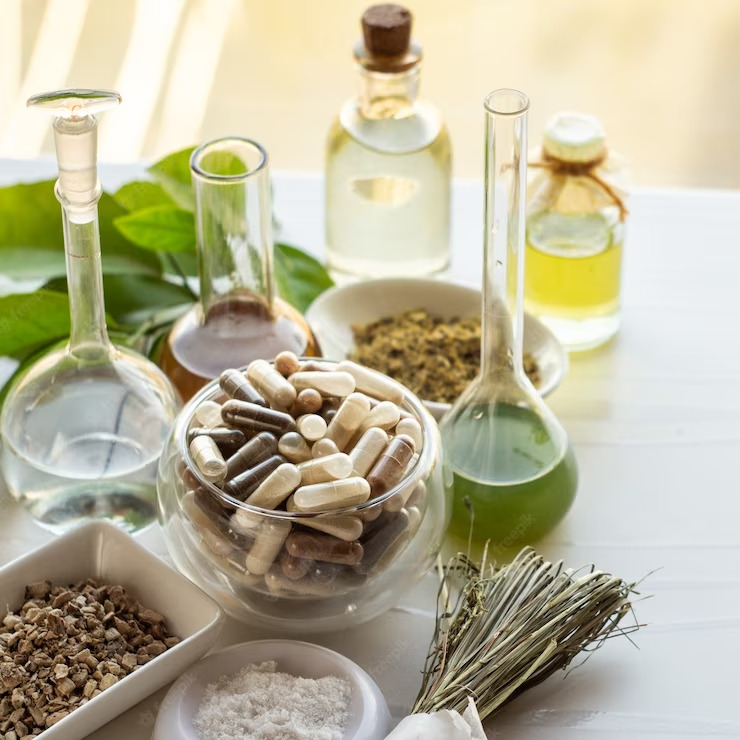
Cancer patients and their families frequently ask about plant-derived compounds — resveratrol from red wine, aloe vera, curcumin from turmeric, green tea catechins — as potential aids alongside their treatment. The interest is understandable: these molecules have genuinely interesting biology. Understanding what the science actually shows, however, requires distinguishing between three very different types of evidence: laboratory (in vitro) studies, animal models, and human clinical trials.
Resveratrol: Promise and Toxicity
Resveratrol, a polyphenol concentrated in grape skins, has been studied in nearly 200 papers across two dozen disease areas over the past two decades. In cell cultures, it downregulates NF-kB and STAT3, two signaling pathways central to tumor growth and inflammation, and appears to support p53, the cell’s natural tumor-suppressor mechanism. A small pre-surgical trial in colorectal cancer patients found reduced tumor cell proliferation after several days of high-dose resveratrol.
Yet a systematic review of clinical trials describes the compound’s overall effect in cancer as “ambiguous and sometimes even detrimental” — and a Phase II trial in multiple myeloma patients using 5 grams per day of a resveratrol formulation was halted after cases of kidney toxicity, possibly contributing to a patient’s death. Poor bioavailability remains the central obstacle: very little orally administered resveratrol reaches tumor tissue at the concentrations used in laboratory experiments.
Aloe Vera and Aloe-Emodin: Preclinical Evidence, Not Yet Confirmed
Aloe vera tells a similar story. Aloe-emodin, an anthraquinone compound found in aloe leaves, showed a striking and selective effect against neuroectodermal tumors in a landmark study — inhibiting tumor growth in mice without harming healthy cells. Since then, laboratory research has extended this activity to breast, lung, liver, and skin cancer cell lines.
But nearly all of this evidence remains preclinical; controlled human trials of aloe-emodin in cancer patients are essentially absent from the literature, and whole-leaf aloe preparations used informally by many patients are not equivalent to the purified compound studied in the lab.
Curcumin, Green Tea, and the Bioavailability Problem
Curcumin, green tea’s EGCG, and related compounds such as sulforaphane and genistein follow a comparable pattern: strong laboratory rationale, real but limited early-phase human trials, and a persistent bioavailability problem. Curcumin researchers have tried to address this with piperine (black pepper extract) and nanoparticle delivery systems, with mixed success.
Green tea extract has arguably progressed furthest, with randomized Phase II trials evaluating its role in bladder cancer tissue and colorectal adenoma prevention — though these remain prevention studies rather than treatments for existing tumors.
A Critical Clinical Point: Antioxidants and Cancer Treatment
One point deserves particular clinical attention: many of these compounds are potent antioxidants, and several chemotherapy drugs and radiotherapy work in part by generating oxidative damage inside cancer cells.
Selected References
- Fallah et al. Resveratrol for Cancer Radio-Sensitization. Food Science & Nutrition, 2026.
- The Therapeutic Potential of Resveratrol: A Review of Clinical Trials. npj Precision Oncology, 2017.
- Resveratrol for the Management of Human Health: Systematic Review of Clinical Trials. PMC, 2024.
- Pecere T, et al. Aloe-emodin Is a New Type of Anticancer Agent. Cancer Research, 2000.
- Anti-cancer Effects of Aloe-emodin: A Systematic Review. PMC, 2019.
- Revisiting Curcumin in Cancer Therapy. MDPI, 2025.
- Green Tea Extract in Treating Patients With Nonmetastatic Bladder Cancer. ClinicalTrials.gov NCT00666562.
For personalized guidance on integrating evidence-based nutrition into your cancer care, explore our Oncology Nutrition Consultation service.
Prepared by Dr. Schirippa · Oncology Nutrition Consultations