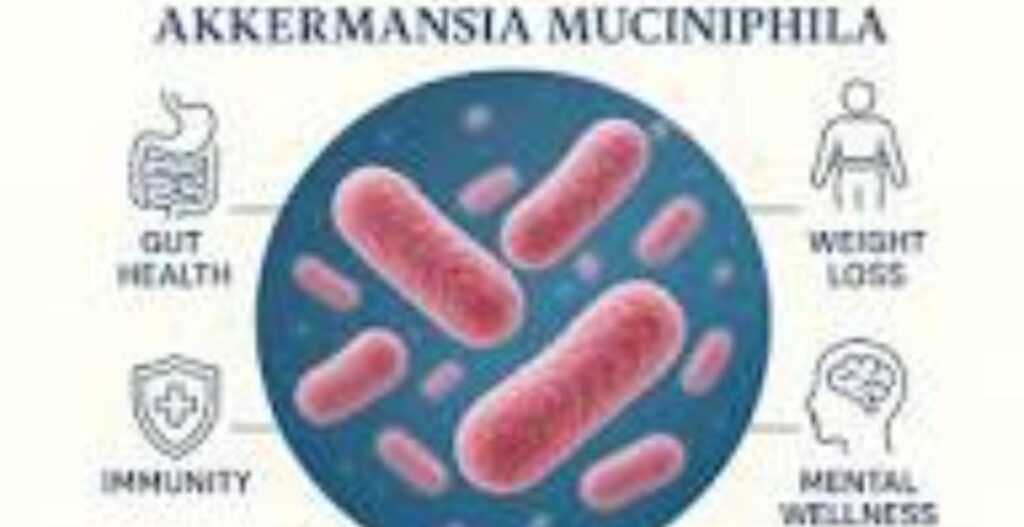
Akkermansia muciniphila and Nutrient-Sensing Pathways
The gut microbiome is increasingly recognized as an active component of human metabolism rather than simply a collection of microorganisms living inside the gastrointestinal tract.
Among the bacterial species receiving particular attention, Akkermansia muciniphila has emerged as a potential regulator of intestinal barrier function, inflammation, glucose homeostasis, lipid metabolism and energy balance.
A particularly interesting area of research concerns the relationship between A. muciniphila and nutrient-sensing pathways.
Nutrient-sensing pathways are cellular systems that detect changes in nutrient availability and energy status and translate these signals into metabolic responses. They help determine whether cells should store energy, synthesize macromolecules, oxidize fatty acids, increase mitochondrial activity or activate energy-conserving mechanisms.
Major nutrient and energy sensors include AMP-activated protein kinase (AMPK), mechanistic target of rapamycin (mTOR), insulin/PI3K/AKT signaling, SIRT1 and related metabolic regulators. These pathways are tightly interconnected and are fundamental to metabolic homeostasis.
The emerging hypothesis is that the gut microbiome—and potentially A. muciniphila in particular—can influence these pathways through microbial metabolites, microbial surface molecules, intestinal signaling and gut–liver communication.
This creates a fascinating biological bridge:
Diet → gut microbiome → microbial metabolites → nutrient sensing → cellular metabolism
What Are Nutrient-Sensing Pathways?
Cells constantly monitor their energetic and nutritional environment.
When nutrients and energy are abundant, anabolic pathways tend to be activated. Cells can synthesize proteins, lipids and other macromolecules and store excess energy.
When energy availability decreases, cells activate adaptive mechanisms that favor energy production and conservation.
Several major signaling systems participate in this process.
AMPK: the cellular energy sensor
AMPK is one of the best-known cellular energy sensors.
It responds to changes in the AMP/ATP and ADP/ATP ratios and becomes activated when cellular energy availability falls. AMPK can subsequently promote processes that generate ATP while suppressing energy-consuming anabolic pathways.
Its functions include regulation of:
- fatty-acid oxidation;
- glucose metabolism;
- mitochondrial activity;
- lipid synthesis;
- autophagy;
- cellular energy balance.
For this reason, AMPK is often described as a central regulator of energy homeostasis.
Recent research continues to emphasize AMPK as an interface connecting nutrient availability, metabolic flux and whole-body energy regulation.
mTOR: sensing nutrients and growth signals
mTOR, particularly mTORC1, responds to amino acids, growth factors and cellular energy status.
While AMPK is strongly associated with energy conservation and catabolic metabolism, mTORC1 promotes anabolic processes when nutrients and growth signals are sufficient.
AMPK and mTOR therefore participate in an important metabolic balance between energy production and cellular growth.
SIRT1 and mitochondrial metabolism
Sirtuins, particularly SIRT1, respond to cellular metabolic conditions and interact with pathways involved in mitochondrial function, oxidative metabolism and stress responses.
One important downstream regulator is PGC-1α, a transcriptional coactivator involved in mitochondrial biogenesis and oxidative metabolism.
This AMPK–SIRT1–PGC-1α network is particularly interesting in the context of metabolic disease.
Where Does Akkermansia muciniphila Fit In?
Akkermansia muciniphila is a mucin-degrading bacterium that resides predominantly within the intestinal mucus layer.
Its abundance has been associated with metabolic health, and experimental studies have shown effects on intestinal barrier integrity, inflammation, glucose metabolism, adiposity and hepatic metabolism. A major review in Nature Reviews Gastroenterology & Hepatology describes A. muciniphila as a promising next-generation beneficial microorganism and summarizes several mechanisms through which it may influence host physiology.
The nutrient-sensing hypothesis adds another layer to this model.
Rather than thinking of A. muciniphila simply as a bacterium that “improves gut health”, it may be more accurate to consider it as one component of a complex gut–metabolic signaling network.
Potential mechanisms include:
- microbial metabolite production;
- interaction with intestinal epithelial cells;
- modulation of inflammatory signaling;
- communication through microbial surface components;
- gut–liver metabolic signaling;
- regulation of AMPK-related pathways.
The evidence is promising, but the strength of evidence varies considerably between mechanisms.
Akkermansia and the AMPK Pathway
The connection between A. muciniphila and AMPK is one of the most interesting aspects of current research.
Experimental work has reported activation of the LKB1–AMPK axis following A. muciniphila administration, accompanied by changes in genes involved in lipid transport, fatty-acid oxidation, mitochondrial metabolism and energy expenditure.
In mouse models, A. muciniphila increased expression of metabolic regulators including PGC-1α and CPT-1β and increased mitochondrial-related signaling in the liver.
These findings are particularly relevant because excessive lipid accumulation, impaired mitochondrial function and insulin resistance are closely interconnected features of metabolic disease.
However, these findings should not be interpreted as proof that A. muciniphila directly activates AMPK in humans in the same way.
The majority of detailed mechanistic evidence remains preclinical.
Microbial Metabolites: The Missing Link?
One of the most plausible explanations for the interaction between the microbiome and nutrient-sensing pathways is microbial metabolism.
Gut bacteria produce a wide range of metabolites that can influence host physiology.
Among these are:
- acetate;
- propionate;
- butyrate;
- secondary bile acids;
- amino-acid-derived metabolites;
- indole derivatives;
- other microbial signaling molecules.
These compounds can interact with host receptors, modify cellular metabolism or alter the availability of metabolic substrates.
In the case of A. muciniphila, acetate has attracted particular interest.
A recent experimental study reported that A. muciniphila-derived acetate could activate hepatic AMPK/SIRT1/PGC-1α signaling in a mouse model of metabolic-associated fatty liver disease. The proposed mechanism involved transport of acetate to the liver and its metabolism to AMP, which could activate AMPK.
This is an intriguing mechanistic pathway:
A. muciniphila
↓
Acetate
↓
AMP formation
↓
AMPK activation
↓
SIRT1 / PGC-1α signaling
↓
Mitochondrial and lipid metabolism
Importantly, this evidence is preclinical. It provides a mechanistic hypothesis rather than proof of a therapeutic effect in humans.
The Gut–Liver Axis
The relationship between A. muciniphila and nutrient sensing becomes even more interesting when viewed through the gut–liver axis.
The intestine and liver are metabolically interconnected through the portal circulation.
Nutrients absorbed from the intestine reach the liver, while microbial metabolites generated in the gut can also enter the portal circulation and influence hepatic physiology.
This creates a potential route through which changes in the intestinal microbial ecosystem can affect:
- hepatic glucose metabolism;
- fatty-acid oxidation;
- lipid synthesis;
- mitochondrial function;
- inflammatory signaling;
- insulin sensitivity.
Experimental studies have reported that A. muciniphila can influence hepatic lipid metabolism and activate the LKB1–AMPK pathway in animal models.
Other recent research has identified changes in PI3K/AKT and AMPK-related signaling in models treated with A. muciniphila, further supporting the idea that microbial interventions may influence several interconnected metabolic pathways rather than a single molecular target.
Akkermansia, AMPK and Fatty-Acid Oxidation
One of the consequences of AMPK activation is increased capacity for energy-producing pathways, including fatty-acid oxidation.
This is relevant to obesity and metabolic dysfunction because excessive lipid accumulation in liver, muscle and adipose tissue can contribute to insulin resistance.
Experimental studies have reported that A. muciniphila administration can increase expression of genes associated with fatty-acid transport and oxidation, including CPT-related pathways and PGC-1α signaling.
Conceptually, this suggests that the microbiome may influence the balance between:
fat storage ↔ fat oxidation
and
energy conservation ↔ energy expenditure.
However, the human clinical significance of these molecular changes remains to be established.
Akkermansia and Insulin Signaling
AMPK is not the only metabolic pathway of interest.
Insulin signaling through the PI3K/AKT pathway is another major regulator of glucose metabolism.
Insulin promotes glucose uptake and storage and coordinates nutrient utilization across tissues.
Metabolic diseases such as obesity and type 2 diabetes are characterized by impaired insulin signaling.
Emerging experimental research suggests that A. muciniphila may influence insulin-related signaling networks, potentially through changes in microbial metabolites, inflammation, intestinal permeability and host metabolic signaling. Recent animal research has reported changes involving PI3K/AKT and AMPK signaling alongside improvements in hepatic lipid metabolism.
Again, these observations are mechanistically interesting but should not be translated directly into clinical claims.
Intestinal Barrier Function and Nutrient Sensing
The relationship between intestinal barrier function and nutrient sensing may be more important than it initially appears.
The intestinal epithelium is not simply a physical wall.
It is an active metabolic and endocrine organ that detects nutrients, microbial signals and inflammatory stimuli.
Research has shown that A. muciniphila can influence intestinal barrier integrity and epithelial signaling. Experimental work in intestinal epithelial cells has reported activation of AMPK following exposure to live or pasteurized A. muciniphila, with evidence suggesting involvement of TLR2 signaling.
This raises the possibility of a local mechanism:
Akkermansia → intestinal epithelial signaling → AMPK → barrier function
while simultaneously, microbial metabolites may provide a systemic route:
Akkermansia → microbial metabolites → liver/muscle/adipose tissue → metabolic signaling
These two mechanisms could potentially operate together.
Why This Matters in Obesity and Diabetes
Obesity and type 2 diabetes are not simply diseases of excessive calorie intake.
They involve complex disturbances in:
- insulin signaling;
- mitochondrial function;
- lipid metabolism;
- inflammation;
- appetite regulation;
- intestinal barrier function;
- energy expenditure;
- nutrient sensing.
This is why the microbiome is attracting attention.
If specific microbial species can influence host metabolic signaling, they could become components of future precision approaches to metabolic disease.
A. muciniphila is particularly interesting because research connects it with both intestinal physiology and systemic metabolism.
However, the current evidence does not support the idea that increasing A. muciniphila alone can reverse obesity or diabetes.
For a broader clinical perspective on the interaction between the gastrointestinal system and metabolic health, see Gut Health at Dr. Schirippa.
For the broader management of obesity and its metabolic consequences, see Obesity Treatment at Dr. Schirippa.
Live Akkermansia, Pasteurized Akkermansia and Metabolic Signaling
Another fascinating aspect of this field is that some metabolic effects have been observed with pasteurized A. muciniphila.
This suggests that bacterial viability may not be required for every biological effect.
Microbial surface proteins, membrane components, extracellular vesicles and other molecular structures may interact with host receptors and signaling pathways.
One example is Amuc_1100, an outer-membrane protein that has been extensively investigated as a potential mediator of some A. muciniphila-associated effects.
The literature also describes interactions involving TLR2 and AMPK signaling.
This is changing the conceptual framework around next-generation probiotics.
The question may no longer simply be:
“Can a beneficial bacterium colonize the gut?”
It may also be:
“Which microbial molecules communicate with host metabolic pathways, and can these signals be harnessed therapeutically?”
Nutrient Sensing Is a Network, Not a Single Pathway
It is important to avoid oversimplifying this biology.
There is no single “Akkermansia pathway”.
AMPK interacts with multiple signaling systems, including:
- mTOR;
- insulin/PI3K/AKT;
- SIRT1;
- PGC-1α;
- PPAR signaling;
- inflammatory pathways;
- mitochondrial signaling.
The gut microbiome can potentially affect several of these pathways simultaneously through metabolites, immune interactions and changes in nutrient availability.
This is one reason microbiome research is difficult to translate into simple therapeutic formulas.
The metabolic effect of a bacterium depends not only on its abundance, but also on:
- strain;
- microbial community;
- diet;
- host genetics;
- baseline metabolic state;
- medication;
- intestinal environment;
- microbial metabolites;
- individual baseline microbiome composition.
Recent reviews emphasize this complexity and the importance of cross-feeding and microbial community interactions in determining the biological effects of A. muciniphila.
Could Akkermansia Become a Precision Metabolic Therapy?
This is perhaps the most important question for future research.
Human intervention studies suggest that the response to A. muciniphila may vary according to the individual’s baseline abundance of the bacterium.
Recent clinical research has reported metabolic benefits particularly in individuals with low baseline A. muciniphila levels, suggesting that the microbiome may influence whether an individual responds to supplementation.
This supports a broader concept:
Microbiome → baseline metabolic phenotype → response to intervention
In the future, microbiome profiling could potentially help identify individuals who are more likely to respond to specific microbial interventions.
That would represent a shift from generalized probiotic supplementation toward precision microbiome medicine.
From Nutrients to Signals: A New View of the Gut Microbiome
The most interesting implication of the A. muciniphila research is perhaps conceptual.
Food does not simply provide calories and nutrients.
It also provides substrates for microorganisms.
The microbiota transforms these substrates into metabolites that can interact with host cells.
Host cells then interpret these signals through receptors, metabolic enzymes and nutrient-sensing pathways.
The result is a complex biological communication system:
Diet
↓
Gut microbiota
↓
Microbial metabolite
↓
Intestinal and systemic signaling
↓
AMPK / SIRT1 / mTOR / PI3K-AKT / PPAR pathways
↓
Glucose metabolism + lipid metabolism + mitochondrial function
↓
Metabolic health
A. muciniphila may be one component of this network rather than an isolated metabolic switch.
What We Know—and What We Still Do Not Know
The scientific evidence supports several conclusions.
What is increasingly well supported
A. muciniphila is associated with intestinal and metabolic health, and experimental studies provide evidence for effects on intestinal barrier function, inflammation, lipid metabolism and glucose regulation.
AMPK-related signaling appears to be one potential mechanism linking A. muciniphila to host metabolism.
Microbial metabolites, including acetate, may participate in this communication.
The gut–liver axis provides a plausible route through which microbial signals can influence systemic metabolism.
What remains uncertain
It remains unclear how important these pathways are in humans compared with animal models.
The precise contribution of individual metabolites and bacterial components is still being investigated.
It is also unclear whether increasing A. muciniphila abundance alone is sufficient to produce clinically meaningful metabolic improvements.
Finally, the optimal strain, dose, formulation and patient population remain important unanswered questions.
Conclusion
Akkermansia muciniphila is increasingly viewed as more than a marker of a healthy intestinal microbiome.
Emerging research suggests that this mucin-degrading bacterium may participate in a sophisticated communication network between the gut and host metabolism.
One particularly intriguing possibility is the interaction with nutrient-sensing pathways, especially AMPK-related signaling.
Through microbial metabolites such as acetate, microbial surface components, intestinal epithelial signaling and the gut–liver axis, A. muciniphila may influence pathways involved in mitochondrial function, fatty-acid oxidation, glucose metabolism and energy homeostasis.
However, the field is still developing.
The strongest mechanistic evidence currently comes from experimental models, while human clinical evidence is promising but more limited. Therefore, A. muciniphila should be considered an emerging target for metabolic research, rather than a proven stand-alone treatment for obesity, diabetes or metabolic disease.
The future may lie not in simply increasing one bacterial species, but in understanding the complete network linking:
diet → microbiota → metabolites → nutrient sensors → cellular metabolism → systemic health.
In this framework, Akkermansia muciniphila could become an important component of the emerging field of precision microbiome-based metabolic medicine.
References
- Efeyan A, Comb WC, Sabatini DM. Nutrient-sensing mechanisms and pathways. Nature. 2015;517:302–310. doi:10.1038/nature14190.
- Cani PD, Depommier C, Derrien M, Everard A, de Vos WM. Akkermansia muciniphila: paradigm for next-generation beneficial microorganisms. Nature Reviews Gastroenterology & Hepatology. 2022;19:625–637. doi:10.1038/s41575-022-00631-9.
- Smith TKT, Townsend LK, Smiles WJ, Oakhill JS, Fullerton MD, Steinberg GR, et al. AMPK at the interface of nutrient sensing, metabolic flux and energy homeostasis. Nature Metabolism. 2026;8:27–51.
- Shi J, et al. Pasteurized Akkermansia muciniphila ameliorates LPS-induced intestinal barrier dysfunction via modulating AMPK and NF-κB through TLR2 in Caco-2 cells. Frontiers in Microbiology. 2022.
- [Authors]. Gut Akkermansia muciniphila ameliorates metabolic dysfunction-associated fatty liver disease by regulating the metabolism of L-aspartate via gut-liver axis. Gut Microbes. 2021.
- [Authors]. Akkermansia muciniphila-derived acetate activates the hepatic AMPK/SIRT1/PGC-1α axis to alleviate ferroptosis in metabolic-associated fatty liver disease. 2025.
- Sung Y, Yu YC, Han JM. Nutrient sensors and their crosstalk. Experimental & Molecular Medicine. 2023;55:1076–1089.
- [Authors]. Akkermansia muciniphila: promises and pitfalls for next-generation beneficial microorganisms. Archives of Microbiology. 2025. doi:10.1007/s00203-025-04263-w.
- [Authors]. Akkermansia muciniphila: A key player in gut microbiota-based disease modulation. Microbiological Research. 2025; PMID: 40845731.
- [Authors]. Akkermansia muciniphila ameliorates fatty liver through microbiota-derived α-ketoisovaleric acid metabolism and hepatic PI3K/Akt signaling. 2025.