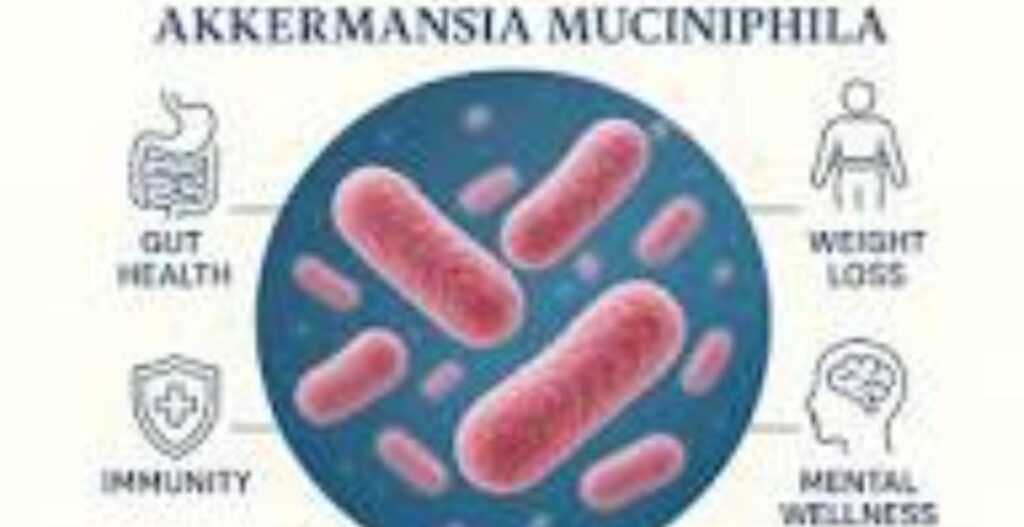
Akkermansia muciniphila and Metabolic Health
The intestinal microbiome has emerged as an important component of metabolic physiology, linking the gastrointestinal tract with energy metabolism, immune regulation, inflammation, and glucose homeostasis. Among the microorganisms attracting increasing scientific interest, Akkermansia muciniphila has become one of the most extensively investigated bacteria in relation to obesity, insulin resistance, type 2 diabetes, and metabolic syndrome.
A. muciniphila is a Gram-negative, anaerobic bacterium that predominantly resides within the intestinal mucus layer. Its ability to use mucin as a substrate has made it particularly interesting from a physiological perspective because the mucus layer is not simply a passive barrier: it represents a dynamic interface between the intestinal microbiota and the host.
Research suggests that A. muciniphila may contribute to intestinal barrier integrity, metabolic regulation, immune homeostasis, and host-microbe communication. However, the scientific evidence should be interpreted carefully. Associations between low A. muciniphila abundance and metabolic disease do not automatically demonstrate causality, and human intervention trials have produced more nuanced results than early preclinical studies suggested.
For a broader clinical perspective on the relationship between digestive function, inflammation, and metabolic health, see Dr. Schirippa’s Gut Health approach.
What Is Akkermansia muciniphila?
Akkermansia muciniphila was first described in human fecal samples in 2004 and belongs to the phylum Verrucomicrobiota. It is specialized in the degradation of mucins, the glycoproteins that form a major component of the intestinal mucus layer.
At first glance, a bacterium that consumes mucus might appear potentially harmful. In physiological conditions, however, mucin degradation can be part of a dynamic process in which microbial activity stimulates mucus turnover and contributes to the ecological balance of the intestinal environment.
The relationship is therefore more accurately described as a host-microbe interaction rather than simply a bacterium “protecting” the gut.
Experimental and observational research has associated higher levels of A. muciniphila with markers of metabolic health, while reduced abundance has been reported in several metabolic conditions, including obesity and type 2 diabetes. Reviews of the literature have proposed several mechanisms through which A. muciniphila and its molecular components could influence metabolic physiology. [1–4]
Akkermansia muciniphila and the Intestinal Barrier
One of the most frequently proposed mechanisms involves the intestinal barrier.
The intestinal epithelium regulates the movement of nutrients, metabolites, microbial products, and immune stimuli between the gut lumen and the circulation. Disruption of barrier function may increase exposure to microbial components and contribute to low-grade systemic inflammation, although the precise causal relationships remain an active area of research.
A. muciniphila has been investigated for its potential effects on mucus production, epithelial integrity, tight-junction regulation, and host immune signaling. Experimental studies also suggest that specific bacterial components may reproduce some of the metabolic effects observed with the whole organism.
This distinction is important because the biological activity of A. muciniphila may not depend exclusively on bacterial survival or colonization. Surface proteins, extracellular vesicles, and other microbial molecules are being investigated as potential mediators of host effects. [3,4]
Consequently, the future of A. muciniphila research may extend beyond conventional probiotics toward precisely characterized microbial-derived products or “postbiotic” approaches.
Akkermansia muciniphila and Obesity
Obesity is a multifactorial chronic disease involving energy balance, adipose tissue biology, endocrine signaling, inflammation, behavior, genetics, and environmental factors. The gut microbiome is increasingly considered one component of this complex network.
Several observational studies have reported an inverse association between A. muciniphila abundance and overweight or obesity. Animal studies have provided stronger mechanistic evidence, suggesting that administration of A. muciniphila can influence body weight, adiposity, glucose metabolism, inflammation, and intestinal barrier function.
A 2024 meta-analysis of 15 animal studies reported that A. muciniphila administration was associated with reductions in body-weight gain and fasting glucose, as well as improvements in glucose tolerance. However, the authors also emphasized substantial heterogeneity among the experimental studies and the need for longer-term research. [5]
Human evidence is more limited.
In a landmark 2019 randomized, double-blind, placebo-controlled pilot study, 32 overweight or obese insulin-resistant participants completed a three-month intervention with live or pasteurized A. muciniphila. Pasteurized A. muciniphila was associated with improved insulin sensitivity, lower insulin concentrations, and a reduction in total cholesterol compared with placebo. Changes in body weight and fat mass were more modest and did not reach conventional statistical significance. [6]
These findings were important because they suggested that bacterial viability might not be essential for all metabolic effects.
More recent research has added an important layer of complexity.
A 2026 randomized controlled trial involving 90 adults with overweight or obesity examined pasteurized A. muciniphila during weight-loss maintenance. After an initial low-energy diet that produced at least 8% weight loss, participants received either pasteurized A. muciniphila MucT or placebo for 24 weeks. Weight regain was lower in the A. muciniphila group: approximately 1.2 kg compared with 3.2 kg in the placebo group. [7]
This study provides clinically relevant evidence that A. muciniphila may potentially contribute not only to weight loss itself but also to the difficult problem of maintaining weight loss.
Nevertheless, these findings should not be interpreted as evidence that A. muciniphila is a stand-alone treatment for obesity. Sustainable weight management remains dependent on comprehensive nutritional, behavioral, metabolic, and medical strategies.
For information on a physiology-based approach to long-term weight management, see Dr. Schirippa’s Obesity Treatment program.
Akkermansia muciniphila and Type 2 Diabetes
Type 2 diabetes is characterized by insulin resistance, progressive impairment of pancreatic beta-cell function, and chronic disturbances in glucose metabolism. Increasing evidence suggests that the gut microbiome may interact with these processes through intestinal permeability, inflammation, microbial metabolites, bile acids, and enteroendocrine signaling.
A. muciniphila has attracted particular attention because experimental studies suggest that it may influence glucose homeostasis and insulin sensitivity.
The human evidence, however, is not uniformly positive.
A 2025 randomized, double-blind, placebo-controlled clinical trial investigated A. muciniphila supplementation in 58 adults with overweight or obesity and type 2 diabetes. Overall, both the intervention and placebo groups experienced reductions in body weight and HbA1c, without statistically significant differences between groups.
A particularly interesting finding emerged from subgroup analysis: participants with low baseline intestinal A. muciniphila levels showed better colonization and experienced significant reductions in body weight, fat mass, and HbA1c compared with placebo. These effects were not observed in participants who already had relatively high baseline levels of the bacterium. [8]
This finding supports an increasingly important concept in microbiome research: microbiome interventions may not work equally well in everyone.
The baseline microbial ecosystem may influence whether a microorganism can successfully colonize, interact with the host, and produce measurable clinical effects.
Baseline Akkermansia Levels May Matter
The concept of a “responder” phenotype may become central to future microbiome-based therapies.
If individuals with low baseline A. muciniphila abundance are more likely to benefit from supplementation, measuring the intestinal microbiome before intervention could eventually become part of personalized treatment strategies.
Evidence from a 2026 multicenter trial involving 142 adults with metabolic syndrome further supports this hypothesis. The primary intention-to-treat analysis did not demonstrate a significant difference in whole-body insulin sensitivity after four months of pasteurized A. muciniphila compared with placebo.
However, exploratory analyses suggested metabolic and GLP-1-related benefits in selected subgroups, particularly participants with low baseline Akkermansia levels. These participants also showed signals of improvement in insulin sensitivity, body weight, and trunk fat. [9]
These results illustrate why microbiome science should move away from the idea that a single bacterial species is universally beneficial.
The more likely model is one of individualized host-microbiome interaction.
How Could Akkermansia Influence Metabolism?
Several biological mechanisms have been proposed.
1. Intestinal barrier regulation
A. muciniphila may interact with the mucus layer and intestinal epithelium, potentially influencing barrier integrity and epithelial signaling.
2. Immune and inflammatory signaling
The bacterium and its molecular components can interact with host immune pathways. Experimental studies suggest that these interactions may influence inflammation, including metabolic inflammation.
3. Short-chain fatty acids and microbial metabolites
Mucin degradation and microbial cross-feeding can influence the production of metabolites, including short-chain fatty acids. These compounds can interact with intestinal and systemic signaling pathways.
4. GLP-1 and enteroendocrine signaling
Recent research has investigated links between A. muciniphila, enteroendocrine cells, and glucagon-like peptide-1 (GLP-1), an important hormone involved in glucose regulation, insulin secretion, appetite, and gastrointestinal physiology. Human trial data suggest that increases in postprandial GLP-1 may occur in specific subgroups responding to pasteurized A. muciniphila. [9]
5. Metabolic inflammation
Obesity and insulin resistance are associated with chronic, low-grade inflammation. Experimental studies suggest that A. muciniphila may influence inflammatory pathways and adipose tissue metabolism, although translating these mechanisms from animal models to clinical practice requires caution.
Live Probiotic or Pasteurized Akkermansia?
One of the most interesting aspects of the research is that some clinical benefits have been observed with pasteurized rather than live bacteria.
Traditional probiotics are generally defined as live microorganisms administered in adequate amounts that confer a health benefit on the host. A. muciniphila has often been described as a “next-generation probiotic,” but the clinical evidence increasingly points toward a broader category of microbial therapeutics.
Pasteurization can eliminate bacterial viability while preserving some biologically active structures and molecules.
The 2019 human pilot trial found metabolic improvements with pasteurized A. muciniphila, while the 2026 weight-maintenance trial also used a pasteurized preparation. [6,7]
This raises the possibility that some effects are mediated by microbial components rather than by long-term colonization with viable organisms.
However, it would be premature to conclude that pasteurized A. muciniphila is universally superior to live preparations. Different strains, formulations, doses, populations, treatment durations, and baseline microbiome profiles can produce different outcomes.
Akkermansia and Cardiometabolic Disease
The potential relevance of A. muciniphila extends beyond body weight and glycemic control.
Metabolic syndrome involves a cluster of abnormalities including central adiposity, insulin resistance, dyslipidemia, hypertension, and increased cardiovascular risk. Because these conditions share biological pathways involving inflammation, intestinal barrier function, and metabolic signaling, A. muciniphila has been investigated as a possible component of a broader cardiometabolic strategy.
Reviews have reported associations between A. muciniphila abundance and metabolic disorders, including obesity, type 2 diabetes, cardiovascular disease, and metabolic dysfunction-associated fatty liver disease. [3,4]
Importantly, association should not be confused with causation.
A lower abundance of A. muciniphila may be a consequence of diet, obesity, medications, metabolic dysfunction, or other environmental factors rather than the primary cause of disease.
Diet and the Intestinal Ecosystem
A major implication of microbiome research is that bacterial abundance should not be considered in isolation.
A. muciniphila exists within a complex microbial ecosystem. Its abundance and activity can be influenced by diet, fiber availability, host physiology, medications, bile acids, and interactions with other microorganisms.
Dietary patterns rich in diverse plant foods and fermentable substrates may support a more favorable microbial environment. Recent research on Mediterranean dietary patterns, for example, suggests improvements in several metabolic outcomes alongside changes in microbiome composition, including enrichment of taxa considered potentially beneficial such as A. muciniphila. [10]
The microbiome is highly individualized, and the response to dietary interventions varies substantially between people.
What Does the Evidence Actually Show?
The current evidence can be summarized in three levels.
Preclinical evidence: strong and biologically plausible. Animal studies consistently suggest that A. muciniphila can influence body weight, glucose metabolism, inflammation, and intestinal barrier function.
Human observational evidence: generally supportive of an association between A. muciniphila abundance and metabolic health, but observational studies cannot establish causality.
Human intervention evidence: promising but still developing. Randomized trials demonstrate safety and several metabolic signals, but effects are not uniform and may depend on baseline A. muciniphila abundance, metabolic phenotype, formulation, and other host factors. [5–9]
The most recent trials are particularly important because they strengthen the enthusiasm generated by earlier animal studies while simultaneously strengthening the case for targeted, personalized microbiome interventions.
Is Akkermansia muciniphila a Treatment for Obesity or Diabetes?
At present, A. muciniphila should be considered an emerging microbiome-based therapeutic strategy, not a replacement for established medical treatment.
The strongest scientific interpretation is that A. muciniphila represents a promising biological target that may eventually be integrated into personalized metabolic care.
Future studies need to clarify:
- Which patients benefit most?
- Does baseline A. muciniphila abundance predict response?
- Are specific strains superior?
- Is pasteurized bacteria preferable to live bacteria?
- Which bacterial molecules mediate the clinical effects?
- How durable are the metabolic improvements?
- How does A. muciniphila interact with diet, medications, GLP-1-based therapies, and other microbiome interventions?
- Can microbiome profiling reliably identify responders?
Answering these questions will be essential before A. muciniphila can move from an exciting research target to a routine component of evidence-based metabolic medicine.
Conclusion
Akkermansia muciniphila has emerged as one of the most intriguing microorganisms in contemporary microbiome research.
Its relationship with the intestinal mucus layer, epithelial barrier, immune system, and host metabolism provides a biologically plausible framework for understanding why it has been associated with obesity, insulin resistance, type 2 diabetes, and metabolic syndrome.
The clinical evidence is encouraging.
Early human studies demonstrated metabolic effects of supplementation, including with pasteurized bacteria. More recent randomized trials suggest that benefits may be concentrated in individuals with low baseline Akkermansia abundance and may include improved weight-loss maintenance, insulin sensitivity, and GLP-1 responses.
Akkermansia muciniphila is a universal “miracle bacterium.”
It may represent a new generation of precision microbiome therapeutics, in which the effectiveness of an intervention depends on the individual microbial ecosystem and metabolic phenotype.
As research progresses, the most clinically relevant question may no longer be simply “How can we increase Akkermansia?” but rather:
“Which patients are most likely to benefit from targeting Akkermansia, and how can this intervention be integrated safely into comprehensive metabolic care?”
References
- Niu H, et al. Akkermansia muciniphila: a potential candidate for ameliorating metabolic diseases. Frontiers in Immunology. 2024;15:1370658. doi:10.3389/fimmu.2024.1370658.
- Zhou JC, et al. Akkermansia muciniphila: a promising target for the therapy of metabolic syndrome and related diseases. Chinese Journal of Natural Medicines. 2019;17(11):835–841. doi:10.1016/S1875-5364(19)30097-6.
- Zhang Y, et al. Function of Akkermansia muciniphila in type 2 diabetes and related diseases. Frontiers in Microbiology. 2023. doi:10.3389/fmicb.2023.1196588.
- Niu H, et al. Akkermansia muciniphila: a potential candidate for ameliorating metabolic diseases. Frontiers in Immunology. 2024;15:1370658. doi:10.3389/fimmu.2024.1370658.
- Liu E, Ji X, Zhou K. Akkermansia muciniphila for the Prevention of Type 2 Diabetes and Obesity: A Meta-Analysis of Animal Studies. Nutrients. 2024;16(20):3440. doi:10.3390/nu16203440.
- Depommier C, et al. Supplementation with Akkermansia muciniphila in overweight and obese human volunteers: a proof-of-concept exploratory study. Nature Medicine. 2019;25:1096–1103. doi:10.1038/s41591-019-0495-2.
- Mount S, et al. Pasteurized Akkermansia muciniphila MucT for weight loss maintenance in people with overweight and obesity: a controlled randomized trial. Nature Medicine. 2026;32:2107–2116. doi:10.1038/s41591-026-04394-7.
- Zhang Y, et al. Akkermansia muciniphila supplementation in patients with overweight/obese type 2 diabetes: Efficacy depends on its baseline levels in the gut. Cell Metabolism. 2025;37(3):592–605.e6. doi:10.1016/j.cmet.2024.12.010.
- Suenaert P, et al. Effect of pasteurized Akkermansia muciniphila MucT on insulin sensitivity, body composition, and GLP-1 production in subjects with metabolic syndrome: impact of low baseline gut Akkermansia levels. Gut Microbes. 2026. Clinical trial NCT05114018.
- Mediterranean diet, gut microbiota, and type 2 diabetes: A systematic review and meta-analysis of intervention trials. 2025.
Selected External Scientific Resources
For readers who want to examine the primary clinical evidence, the 2019 proof-of-concept human trial is available through PubMed, while the 2025 randomized trial in people with overweight/obesity and type 2 diabetes is available through PubMed.